Global Market Insights Inc.: Decoding Market Dynamics Through Precision Research
Global Market Insights Inc. (GMI) stands as a pivotal force in market intelligence,

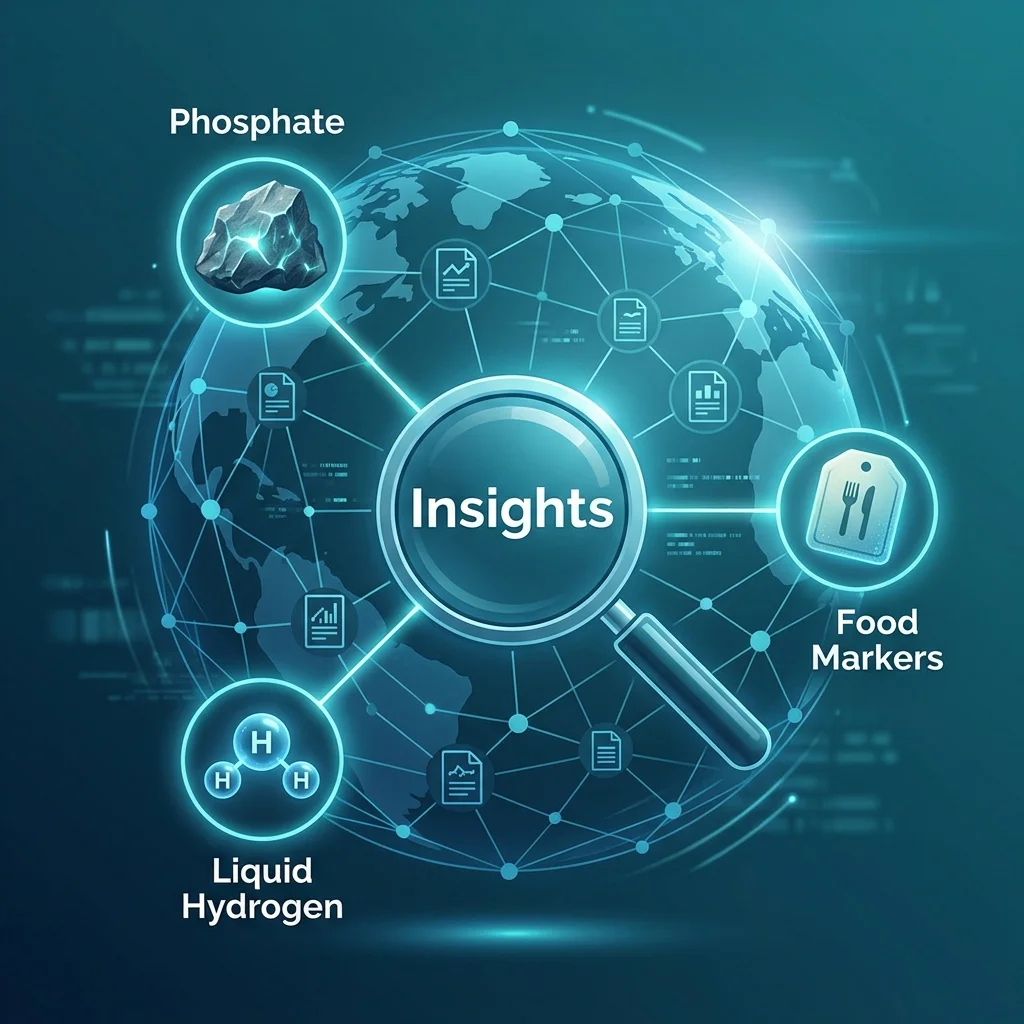
Global Market Insights Inc. Reports Track Market Dynamics Across Mature, Niche, and Regional Sectors
Introduction: The New Currency of Business Strategy – Market Intelligence
In an era defined by rapid technological disruptions, shifting trade policies, and volatile commodity cycles, decision-makers across industries face an unprecedented challenge: separating signal from noise. The sheer volume of data generated daily—from satellite imagery of crop yields to patent filings in hydrogen electrolysis—has made raw information a commodity, not a differentiator. What separates winning strategies from costly missteps is the ability to transform that data into actionable intelligence that reduces decision risk.
Global Market Insights Inc. (GMI), a market research and strategic consulting firm headquartered in Delaware, has carved out a position in this crowded landscape by combining scale with precision. With a portfolio exceeding 13,000 published reports, a client base of more than 5,000 organizations—spanning Fortune 500 corporations, government agencies, academic institutions, and venture-backed startups—and over 3,100 managed consulting projects, GMI covers sectors as diverse as renewable energy, electric vehicles, artificial intelligence, battery technology, oil and gas, semiconductors, and biotechnology. The firm’s stated mission is to bridge the gap between raw market signals and business execution, a proposition that resonates particularly strongly in markets where the cost of being wrong is high.
[IMAGE: Infographic showing GMI’s sector coverage with icons and client diversity (consulting firms, academia, investors)]
The economic logic underpinning firms like GMI has shifted. Ten years ago, market research was largely about access to proprietary databases and analyst reports that few others had. Today, with open data sources proliferating, the value lies in customization—tailoring analysis to the specific geography, timeline, and strategic question a client faces. GMI’s core offering—off-the-rack reports paired with free 20% customization and direct analyst access—reflects this evolution. As the case studies below demonstrate, the firm applies a flexible methodology that adjusts depth, scope, and granularity according to market maturity, growth trajectory, and competitive dynamics.
Three Reports, Three Market Stages: A Comparative Lens on Maturity, Niche, and Region
To understand how GMI calibrates its research approach, it is useful to examine three reports published in July 2026, each representing a distinct market stage. The first is the Phosphate Rock Market, a mature, volume-driven commodity sector. The second is the Edible & Invisible Food Markers (Taggants) Market, a high-growth niche driven by food safety and anti-counterfeiting concerns. The third is the Asia Pacific Electrolysis Liquid Hydrogen Market, a regional emerging sector propelled by clean energy policies. Together, they illustrate how market intelligence firms must adapt their analytical frameworks to different realities.
Phosphate Rock Market (USD 23.4B, 3.5% CAGR 2026–2035): A Mature Commodity
Phosphate rock is the primary raw material for phosphate fertilizers, a critical input for global agriculture. The market is large—valued at approximately USD 23.4 billion in 2026—but grows slowly, with a compound annual growth rate (CAGR) of 3.5% projected through 2035. In such a mature, supply-constrained sector, growth is driven less by technological disruption and more by geopolitical factors: reserves are concentrated in Morocco, China, the United States, and Russia. Trade flows, export restrictions, and fertilizer demand in major agricultural economies (Brazil, India, the United States) determine price trends.
GMI’s report on phosphate rock runs 210 pages—a length that reflects the complexity of supply chain mapping and geopolitical risk analysis required. The report segments the market by type (sedimentary, igneous), application (fertilizers, animal feed, industrial chemicals), and geography (North America, Europe, Asia Pacific, Latin America, Middle East & Africa). It includes detailed cost curves, mining project timelines, and trade tariff impact assessments. For a fertilizer company evaluating a new mine investment or a trading desk hedging price exposure, this level of granularity is essential. The CAGR analysis here is not about explosive growth but about steady-state dynamics and identifying pockets of value—such as the shift toward high-purity phosphate for lithium iron phosphate (LFP) battery production, a trend that GMI’s report flags as a disruptive demand driver.
[IMAGE: Side-by-side comparison chart of market size and CAGR for the three reports, with icons representing each sector]
Edible & Invisible Food Markers (Taggants) Market (USD 268M, 16.1% CAGR): A Niche High-Growth Segment
In stark contrast, the Edible & Invisible Food Markers (Taggants) Market is a niche poised for rapid expansion. Valued at just USD 268 million in 2026, it grows at a 16.1% CAGR through 2035—nearly five times faster than phosphate rock. These microscopic, food-grade markers are used to authenticate products, trace supply chain origins, and detect adulteration. The technology combines advances in biochemistry (edible inks, DNA-based tags) with regulatory pushes for food safety in markets like the European Union and the United States.
Despite its small absolute size, the market’s complexity warrants a 210-page report. Why? Because the emerging market trends—from new regulatory mandates in the EU’s Farm to Fork Strategy to adoption by major food conglomerates like Nestlé and Cargill—require close examination of competing technologies, cost structures, and intellectual property landscapes. GMI’s report segments by marker type (invisible vs. visible), application (dairy, meat, beverages, packaged foods), and geography. It includes profiles of over 15 technology start-ups, patent analysis, and regulatory timelines. For a food safety executive or a venture capital firm evaluating investment in taggant technology, the report provides the necessary framework to assess market readiness and competitive positioning.
Asia Pacific Electrolysis Liquid Hydrogen Market (USD 907.1M, 10% CAGR): A Regional Emerging Sector
The third case study underscores how market intelligence must adapt to regional specifics. The Asia Pacific Electrolysis Liquid Hydrogen Market is projected to reach USD 907.1 million by 2035, growing at a 10% CAGR from 2026. This is a regional market (covering China, Japan, South Korea, India, Australia) driven by national hydrogen strategies, particularly Japan’s Basic Hydrogen Strategy and China’s recent subsidies for green hydrogen production. Unlike the two previous reports, this one is 120 pages—shorter, reflecting a more focused scope and a technology landscape that evolves rapidly.
The brevity does not mean less rigor; it means different emphasis. The report concentrates on electrolyzer technology types (alkaline, PEM, solid oxide), plant capacities (1–10 MW, 10–50 MW, >50 MW), and country-level policy analysis. Because hydrogen is an industry development still in early commercialization, the report leans heavily on project databases, pilot plant announcements, and cost decline curves. For a Korean energy conglomerate evaluating a green hydrogen joint venture in Australia, or a Japanese trading house assessing shipping logistics for liquid hydrogen, the 120-page depth is calibrated to provide decision-critical information without over-analysis of sectors that have not yet matured.
Common thread: GMI tailors report depth—page count, segmentation granularity, and the balance between historical data and forward-looking scenarios—to the market’s complexity, growth trajectory, and the specific decision needs of its target audience.
Beyond Off-the-Rack: GMI’s Four-Pillar Service Model and Customization Edge
While off-the-rack reports form the visible face of GMI’s offerings, the firm’s true differentiator lies in its service architecture. GMI operates through four interconnected pillars: off-the-rack research (standardized reports for broad needs), subscription practice (continuous intelligence for ongoing monitoring), consulting practice (bespoke deep dives tailored to specific strategic questions), and technology advisory (bridging market data with digital transformation roadmaps).
[IMAGE: Four-pillar diagram showing Off-the-Rack Research, Subscription, Consulting, and Technology Advisory with arrows showing client access points]
The cornerstone of this model is the “free 20% customization” policy. Every off-the-rack report comes with a mechanism for buyers to request modifications—whether it’s adding a specific country breakdown, adjusting the forecast period, or incorporating a competitor’s financial data. This is paired with analyst access (a 30-minute call included with each report purchase) and an Excel databook (for enterprise license holders). In an industry developments context where many research providers treat reports as static PDFs, GMI’s approach transforms a commodity product into a semi-customized intelligence tool.
Client Testimonials and Use Cases
Client feedback, gathered from a mix of Fortune 500 companies and early-stage startups, reveals how this model works in practice. A senior strategist at a top-10 global fertilizer producer, who purchased the phosphate rock report, noted: “We needed the standard supply-demand view, but we also wanted sensitivity analysis on Morocco’s export tax changes. The 20% customization covered exactly that, and the analyst call helped us calibrate our price assumptions.” For a food safety startup developing taggant-based authentication, the edible markers report’s 210-page depth was “overwhelming but necessary,” and the ability to request a custom competitor landscape within the customization window saved weeks of internal research.
A clean energy consulting firm working on a hydrogen feasibility study for an Australian mining client used the Asia Pacific electrolysis liquid hydrogen report. The 120-page length was “perfect for a fast-moving sector,” and the Excel databook allowed the team to run their own scenario analyses on production costs. The analyst access clarified uncertainties in China’s subsidy phase-out timeline.
These examples illustrate a broader point: GMI’s strategic consulting capabilities are not separate from its report business; they are embedded in it. The firm claims that more than 60% of its report purchases lead to follow-up consulting engagements—a testament to the trust built through the initial interaction.
The Hidden Economic Logic: From Data Abundance to Customized Insights
Underlying GMI’s approach is a fundamental recognition that the market research industry itself is undergoing a transformation. Data abundance has made generic reports increasingly fungible. The economic value now lies in reducing decision risk for specific stakeholders—the CFO evaluating a capital expense, the product manager prioritizing R&D spend, the government regulator assessing industry readiness.
GMI’s free customization policy is not merely a sales tool; it is a structural response to this shift. By allowing clients to shape reports before purchase, the firm effectively crowdsources its own research priorities. The 20% adjustment cap ensures that the core report retains its integrity for broader audiences, while the customization window creates a low-friction entry point for deeper engagement.
[IMAGE: Abstract visualization of data nodes converging into a customized report output, with decision-making arrows leading to business actions]
In the phosphate rock market, this means the report serves both a trader needing spot price correlations and a strategist looking at battery-grade phosphate demand. In the edible markers market, it serves both a regulatory compliance officer and a venture capitalist. In the Asia Pacific liquid hydrogen market, it serves both a project developer and a policy analyst. The one-size-fits-all model is replaced by a flexible architecture that adjusts depth, format, and focus to the client’s context.
Conclusion: Research as a Lens, Not a Product
Market intelligence firms like GMI are increasingly evaluated not by the number of reports they produce but by the quality of decisions they enable. The three July 2026 reports examined here—spanning a mature commodity, a high-growth niche, and a regional emerging sector—demonstrate that effective research is not monolithic. It requires an understanding of market structure, client needs, and the economic logic of the industries being studied.
For businesses navigating an era where geopolitical uncertainty and technological acceleration are the norm, the value of market research services that combine scale with customization cannot be overstated. GMI’s four-pillar model, its free customization policy, and its willingness to engage analysts directly represent a practical evolution of the industry. As the boundaries between commoditized data and tailored insights continue to blur, firms that master this balance will become indispensable partners in strategic decision-making—not merely vendors of information, but translators of market signals into business action.
*Global Market Insights Inc., headquartered in Delaware, USA, provides market research, consulting, and technology advisory services to clients across 30 countries. For more information, visit www.gminsights.com.*